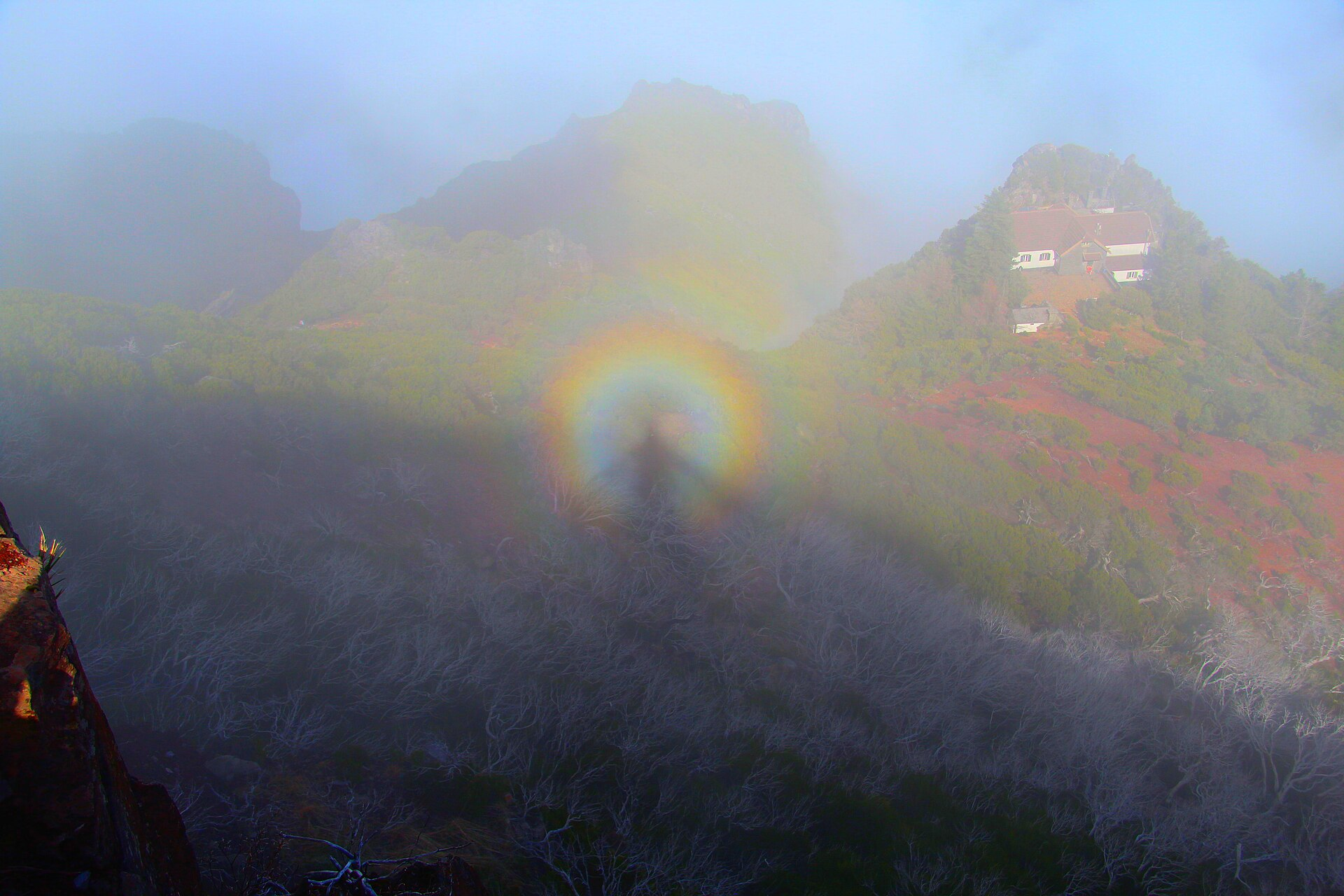
GerritR, Glory and Brocken spectre below the summit of Pico Ruivo, Madeira, 2016.
The Brocken Spectre is an optical phenomenon that appears at high vantage points when an observer is on a cliff or mountain edge, peering into thick fog below. It consists of a Glory, a concentric set of coloured rings of diffracted light. It is like a rainbow, but with a slightly different, radially polarised colour spectrum, with broader rings around the observer’s shadow. Glories appear suspended in fog, forming around the antisolar point where the observer’s shadow is cast, and the light is refracted backwards into the eye of the observer. The shadow appears as a colossal ghost-like figure, seeming larger than it really is because there is a lack of reference points from high ground to accurately judge its distance.
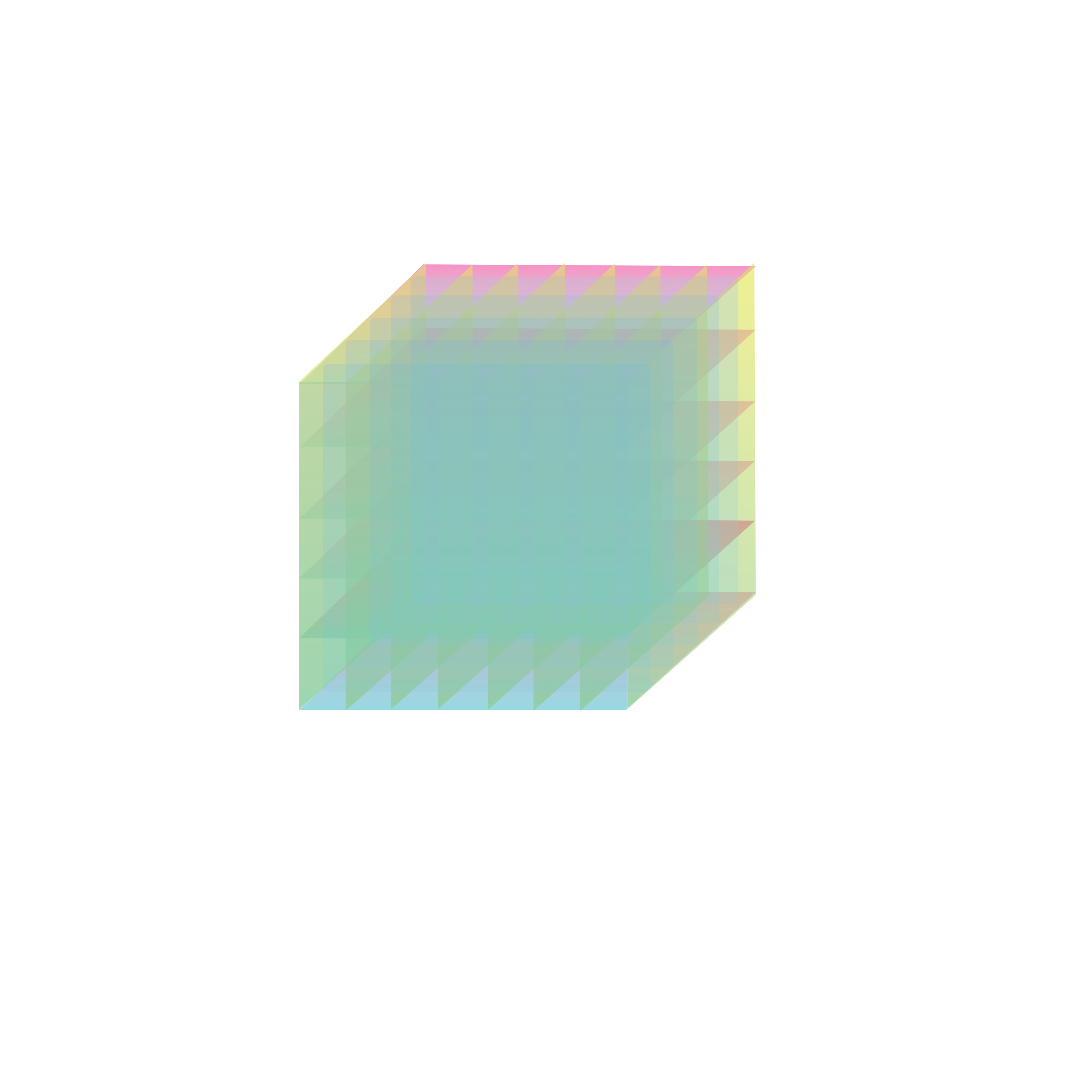
In All Its Glory (2026)
In All Its Glory investigates the tension between our desire to manipulate nature and the limits of our ability to control it. The project began with the Brocken Spectre, an atmospheric phenomenon in which an observer’s magnified shadow appears against mist, sometimes surrounded by a circular rainbow-like effect known as a Glory. Its elusive nature became the catalyst for an investigation into how scientific understanding might allow us to recreate extraordinary natural experiences.
Through geometric calculations, directed light and artificial mist, I attempted to reproduce the optical conditions of the phenomenon. However, the complexity of the Brocken Spectre revealed the limitations of this approach, demonstrating that understanding the physical principles behind a natural event does not necessarily mean it can be fully recreated. This led me to explore the circular rainbow as a perceptual alternative, investigating how its observer-centred geometry could be revealed within a controlled environment.
The installation uses carefully constructed systems to engage with natural processes while acknowledging the uncertainty that remains beyond human control. The project explores how design can establish the conditions for a phenomenon to emerge without guaranteeing its outcome. Rather than treating the difficulty of reproduction as a failure, this project considers it an opportunity to recognise the complexity of nature and question whether our attempts to control it might sometimes diminish the qualities that make it extraordinary.
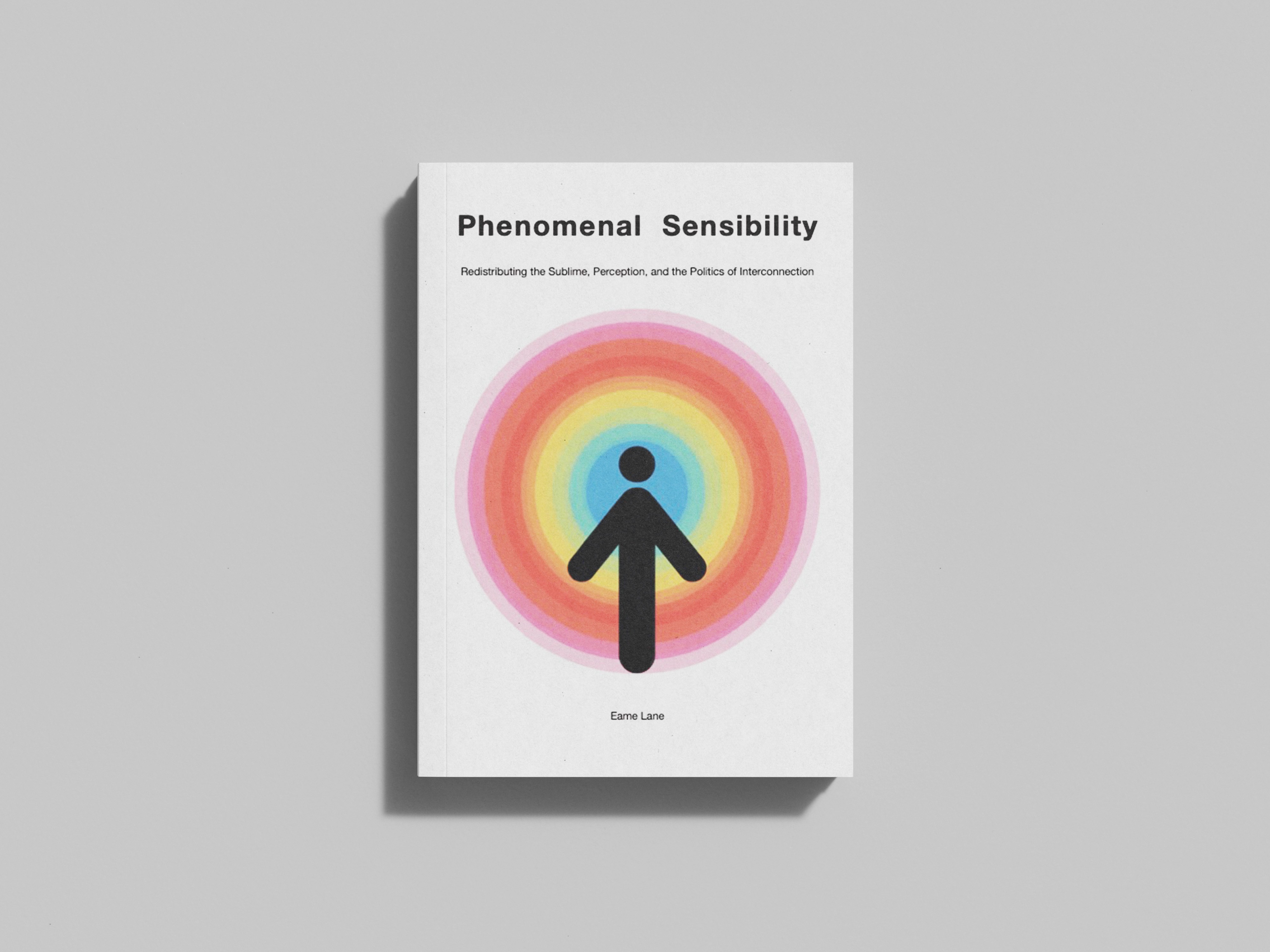
Phenomenal Sensibility (2026)
Phenomenal Sensibility is the contextual report accompanying the work.
It traces the project's origin to the Brocken Spectre, a phenomenon that resists artificial recreation because it's created by complex light backscattering by droplets of roughly 10-15 micrometres which cannot be explained by simple geometric optics alone.
The report documents the failed attempt to manufacture the Brocken Spectre, and the pivot that followed: using the fully understood rainbow as a perceptual proxy. This substitution is what generated the idea of revealing the observer-centred geometry of spectral phenomena - a geometry the rainbow possesses but almost never shows.
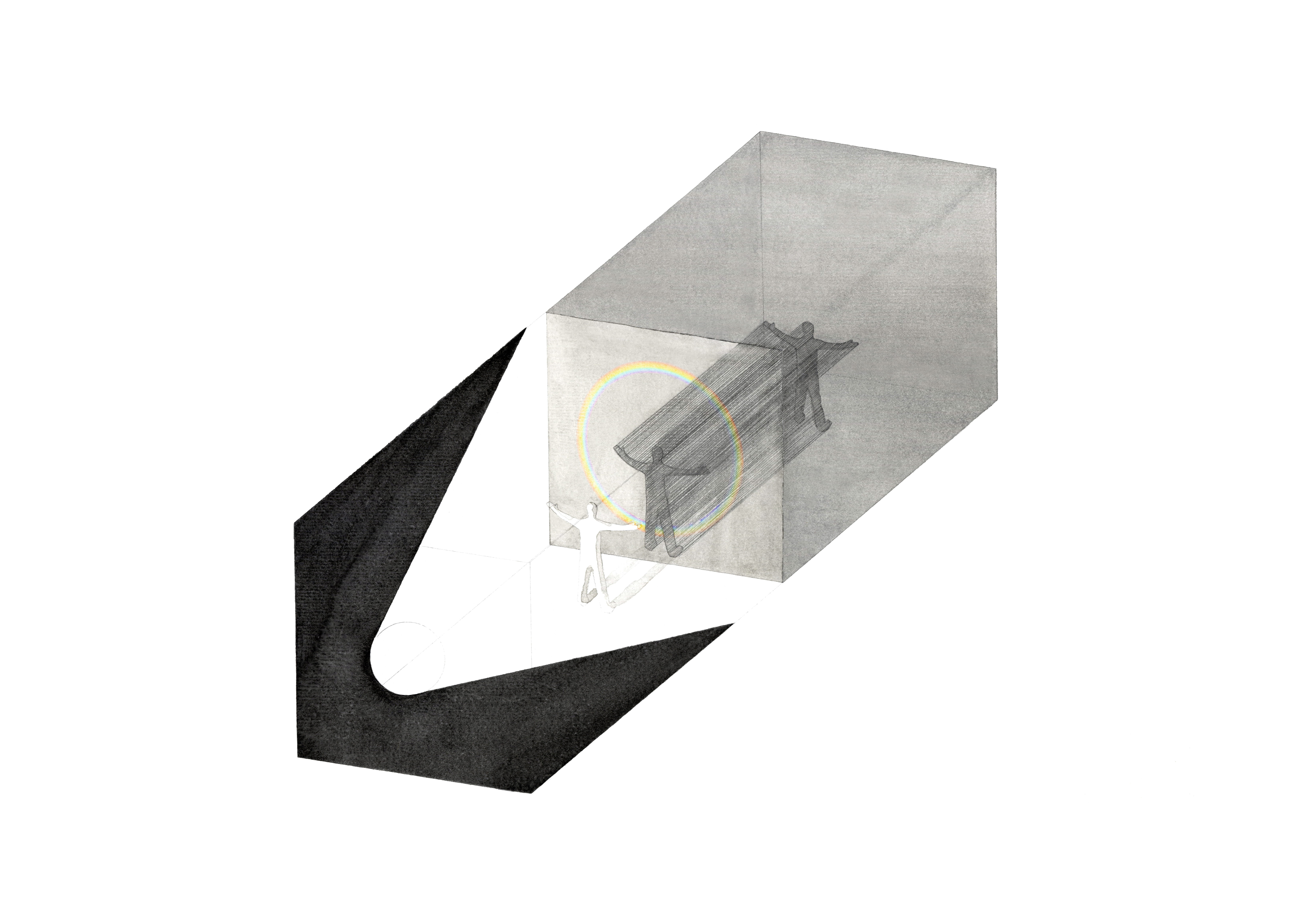
The work began with drawings rather than hardware.
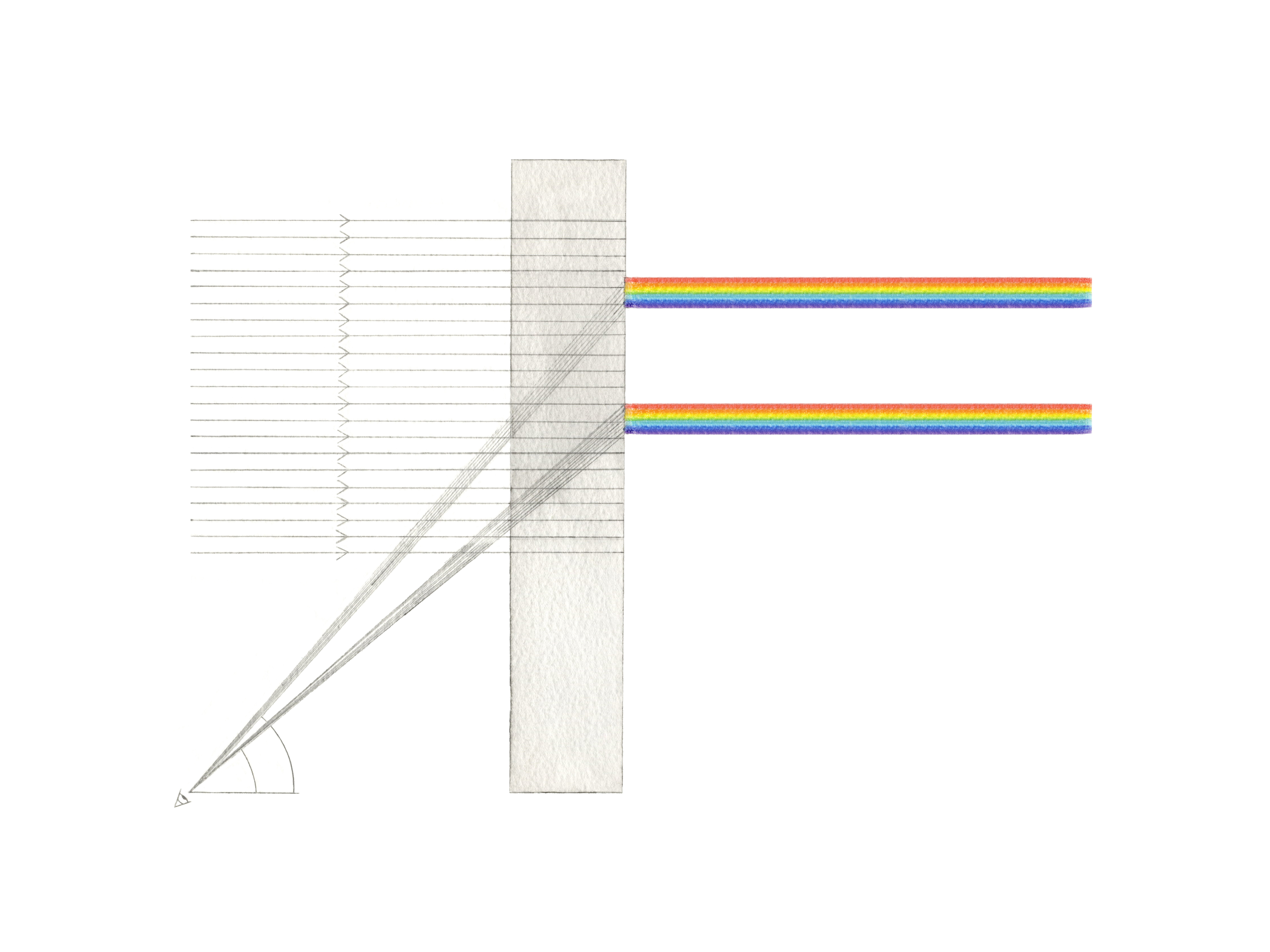
Early speculative and investigative drawings tested whether the rainbow ring could exist at all at ground level - where the light enters, where the mist sits, where the observer stands in relation to both.
Scientific illustrations were developed in conversation with an atmospheric physicist, Giles Harrison, whose input shaped the geometric constraints before any of it was built. The drawings came first, the calculations second, and the physical experimentation third.
GerritR, Glory and Brocken spectre below the summit of Pico Ruivo, Madeira, 2016.
The Brocken Spectre is an optical phenomenon that appears at high vantage points when an observer is on a cliff or mountain edge, peering into thick fog below. It consists of a Glory, a concentric set of coloured rings of diffracted light. It is like a rainbow, but with a slightly different, radially polarised colour spectrum, with broader rings around the observer’s shadow. Glories appear suspended in fog, forming around the antisolar point where the observer’s shadow is cast, and the light is refracted backwards into the eye of the observer. The shadow appears as a colossal ghost-like figure, seeming larger than it really is because there is a lack of reference points from high ground to accurately judge its distance.
In All Its Glory (2026)
In All Its Glory investigates the tension between our desire to manipulate nature and the limits of our ability to control it. The project began with the Brocken Spectre, an atmospheric phenomenon in which an observer’s magnified shadow appears against mist, sometimes surrounded by a circular rainbow-like effect known as a Glory. Its elusive nature became the catalyst for an investigation into how scientific understanding might allow us to recreate extraordinary natural experiences.
Through geometric calculations, directed light and artificial mist, I attempted to reproduce the optical conditions of the phenomenon. However, the complexity of the Brocken Spectre revealed the limitations of this approach, demonstrating that understanding the physical principles behind a natural event does not necessarily mean it can be fully recreated. This led me to explore the circular rainbow as a perceptual alternative, investigating how its observer-centred geometry could be revealed within a controlled environment.
The installation uses carefully constructed systems to engage with natural processes while acknowledging the uncertainty that remains beyond human control. The project explores how design can establish the conditions for a phenomenon to emerge without guaranteeing its outcome. Rather than treating the difficulty of reproduction as a failure, this project considers it an opportunity to recognise the complexity of nature and question whether our attempts to control it might sometimes diminish the qualities that make it extraordinary.
Phenomenal Sensibility (2026)
Phenomenal Sensibility is the contextual report accompanying the work.
It traces the project's origin to the Brocken Spectre, a phenomenon that resists artificial recreation because it's created by complex light backscattering by droplets of roughly 10-15 micrometres which cannot be explained by simple geometric optics alone.
The report documents the failed attempt to manufacture the Brocken Spectre, and the pivot that followed: using the fully understood rainbow as a perceptual proxy. This substitution is what generated the idea of revealing the observer-centred geometry of spectral phenomena - a geometry the rainbow possesses but almost never shows.
The work began with drawings rather than hardware.
Early speculative and investigative drawings tested whether the rainbow ring could exist at all at ground level - where the light enters, where the mist sits, where the observer stands in relation to both.
Scientific illustrations were developed in conversation with an atmospheric physicist, Giles Harrison, whose input shaped the geometric constraints before any of it was built. The drawings came first, the calculations second, and the physical experimentation third.