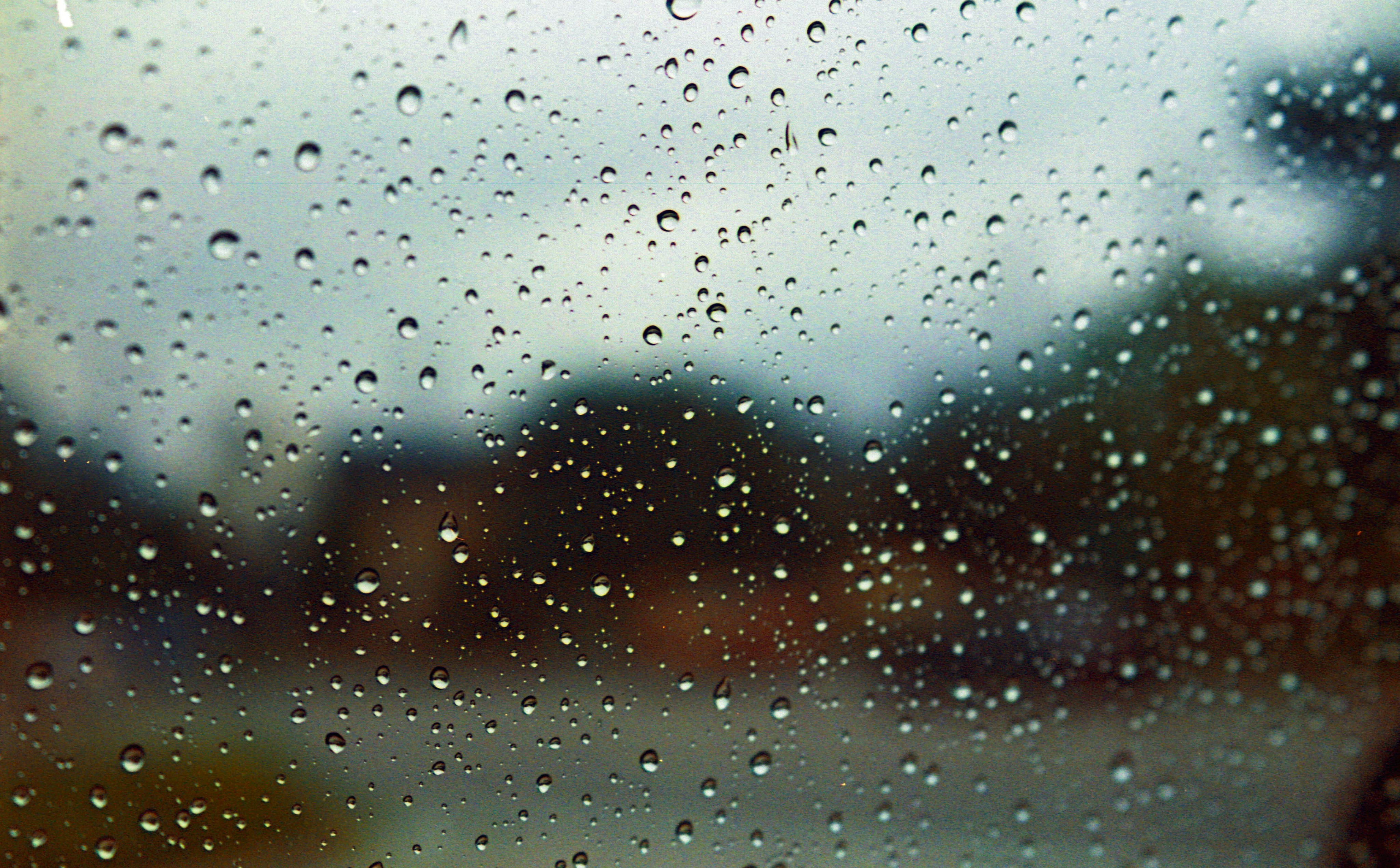
Water droplets on glass manipulate light by acting as tiny curved lenses. As light passes through the air, water and glass, it changes direction through refraction, while reflections at the curved surfaces redirect some of the light. Depending on the shape, size and spacing of the droplets, this can concentrate, scatter or distort the light, creating shifting highlights, patterns and visual distortions.
Optical Illumine (2024)
Optical Illumine developed from an interest in how sunlight interacting with raindrops on glass can distort our perception of the outside world, transforming surroundings into inverted imagery through natural refraction. I became fascinated by how these small droplets could act as natural optical lenses, altering the way we perceive our surroundings while creating a sense of separation from the outside world.
This observation led me to explore the relationship between natural optical phenomena and the screens through which we increasingly experience the world. Both a rain-covered window and a digital screen create a surface between the viewer and their surroundings.
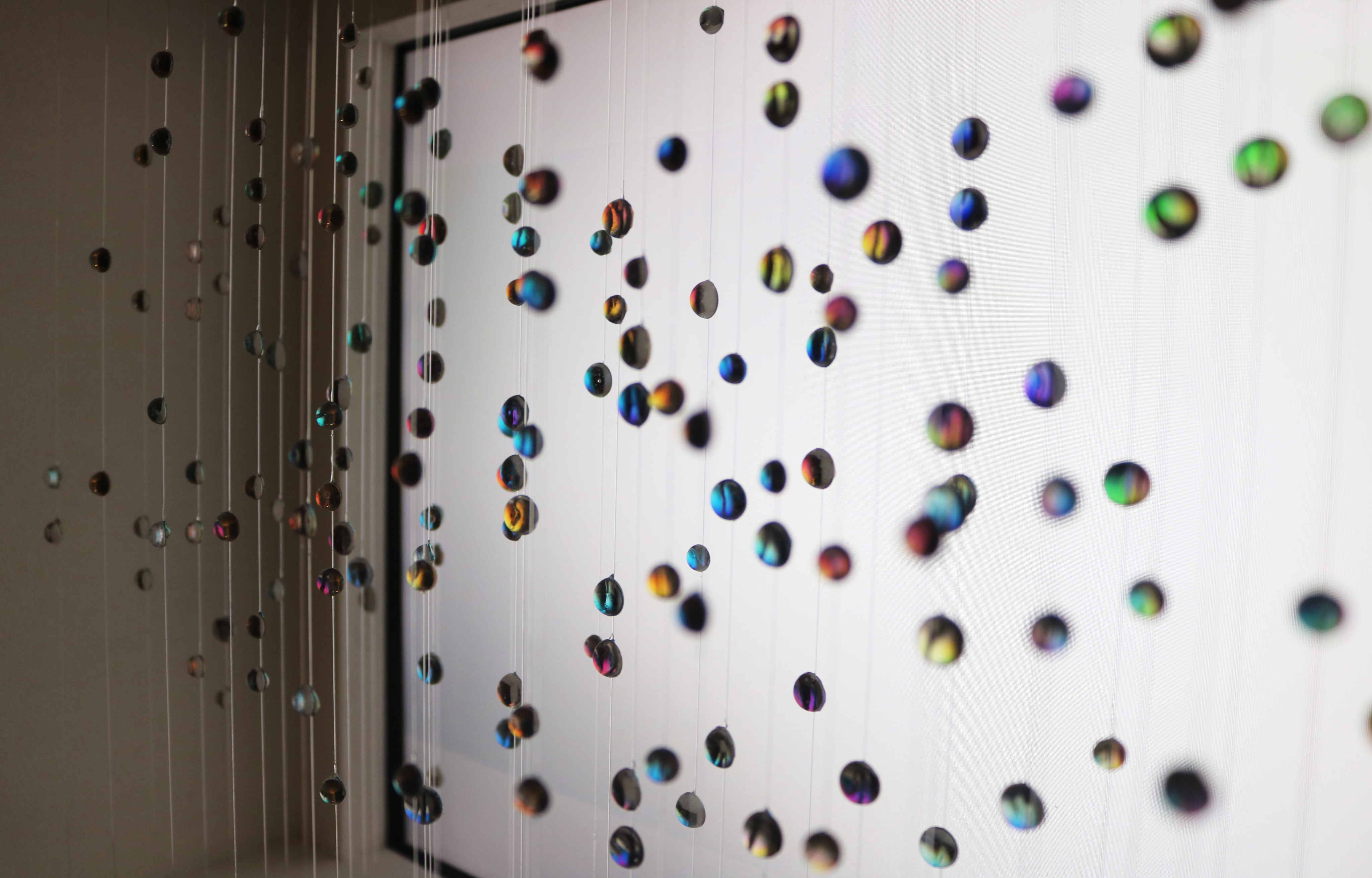
Through experimentation with LCD screens and transparent semi-spheres, I investigated how these two experiences could be brought together. By dismantling an LCD screen and reapplying its polarising layer to suspended transparent semi-spheres, I developed a sculpture in which light and colour shift across the forms, echoing the appearance of sunlight refracting through water droplets. The addition of rainfall sounds introduces an atmospheric dimension, connecting the artificial display to the natural phenomenon that inspired it.
Optical Illumine explores the tension between digital immersion and our relationship with the natural world. By recreating the visual qualities of raindrops through screen technology, the work questions whether our retreat into digital spaces distances us from our surroundings, or whether technology can offer new ways of noticing and appreciating the beauty of everyday natural phenomena.
Water droplets on glass manipulate light by acting as tiny curved lenses. As light passes through the air, water and glass, it changes direction through refraction, while reflections at the curved surfaces redirect some of the light. Depending on the shape, size and spacing of the droplets, this can concentrate, scatter or distort the light, creating shifting highlights, patterns and visual distortions.
Optical Illumine (2024)
Optical Illumine developed from an interest in how sunlight interacting with raindrops on glass can distort our perception of the outside world, transforming surroundings into inverted imagery through natural refraction. I became fascinated by how these small droplets could act as natural optical lenses, altering the way we perceive our surroundings while creating a sense of separation from the outside world.
This observation led me to explore the relationship between natural optical phenomena and the screens through which we increasingly experience the world. Both a rain-covered window and a digital screen create a surface between the viewer and their surroundings.
Through experimentation with LCD screens and transparent semi-spheres, I investigated how these two experiences could be brought together. By dismantling an LCD screen and reapplying its polarising layer to suspended transparent semi-spheres, I developed a sculpture in which light and colour shift across the forms, echoing the appearance of sunlight refracting through water droplets. The addition of rainfall sounds introduces an atmospheric dimension, connecting the artificial display to the natural phenomenon that inspired it.
Optical Illumine explores the tension between digital immersion and our relationship with the natural world. By recreating the visual qualities of raindrops through screen technology, the work questions whether our retreat into digital spaces distances us from our surroundings, or whether technology can offer new ways of noticing and appreciating the beauty of everyday natural phenomena.